Timnit Gebru shows how people can push AI to improve
AI is here, and it can feel scary. What happens to our jobs and way of life? Timnit Gebru’s work offers a practical reason to believe people can shape what happens next.
In 2018, she and Joy Buolamwini tested software that classified gender from photographs. It made far more mistakes with darker-skinned women than lighter-skinned men.
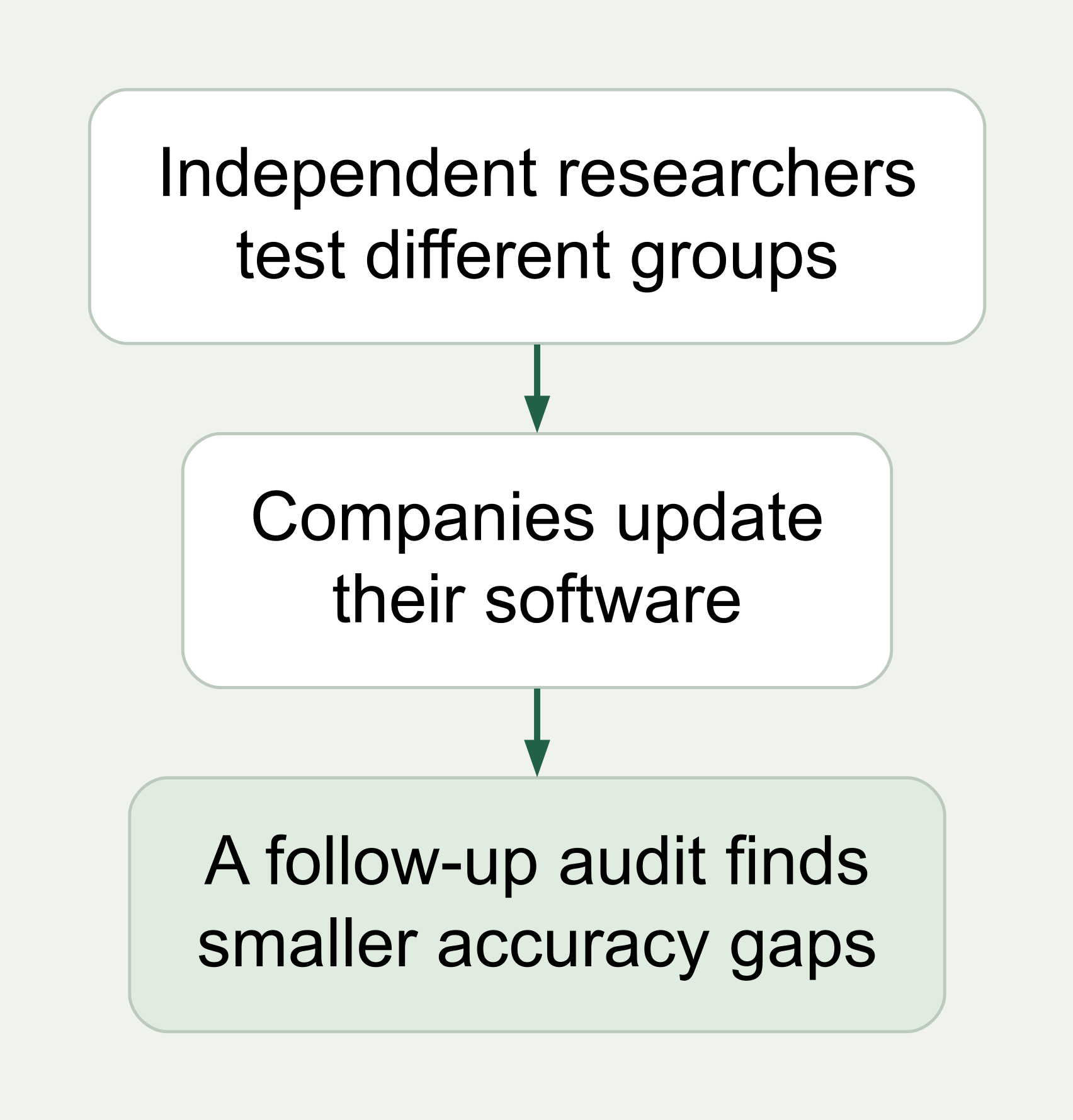
After their audit, IBM, Microsoft and Megvii updated their systems. Follow-up research found all three reduced those accuracy gaps within seven months. Checking who technology fails can give companies a clear problem to fix.
That doesn’t settle concerns about jobs or privacy: even accurate systems can be misused.
Gebru now leads the Distributed Artificial Intelligence Research Institute, where projects include helping data workers investigate their own working conditions. She has been named a 2026 Right Livelihood Award winner for challenging concentrated power in AI.
Her work shows that independent scrutiny can lead to measurable improvements, and that people affected by technology deserve a voice in shaping it.
Sources
React to this story
Keep the useful discoveries coming.
Get stories around your interests, with links to the evidence and context, in a free email on some Fridays.
See an example and sign up