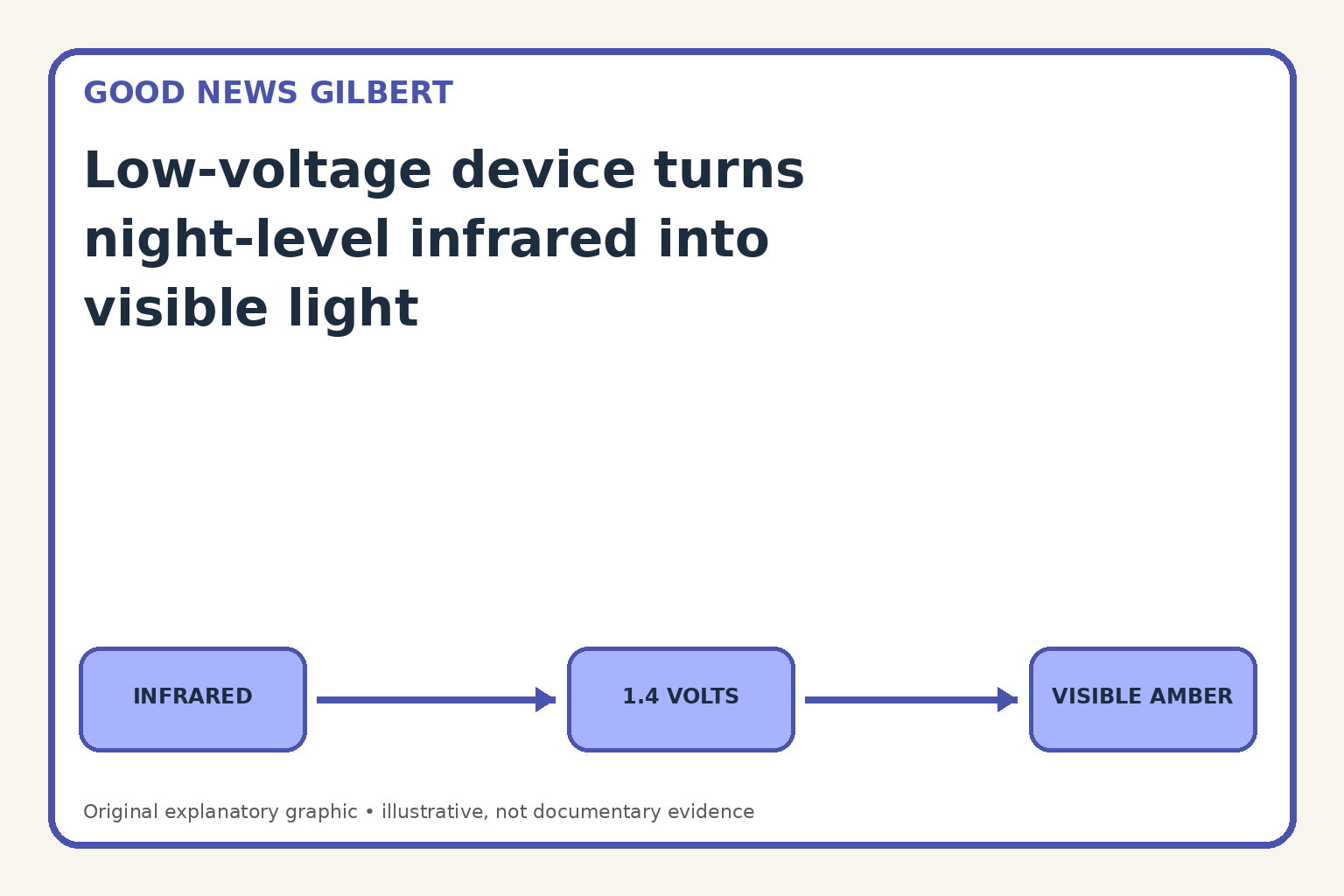
Low-voltage device turns night-level infrared into visible light
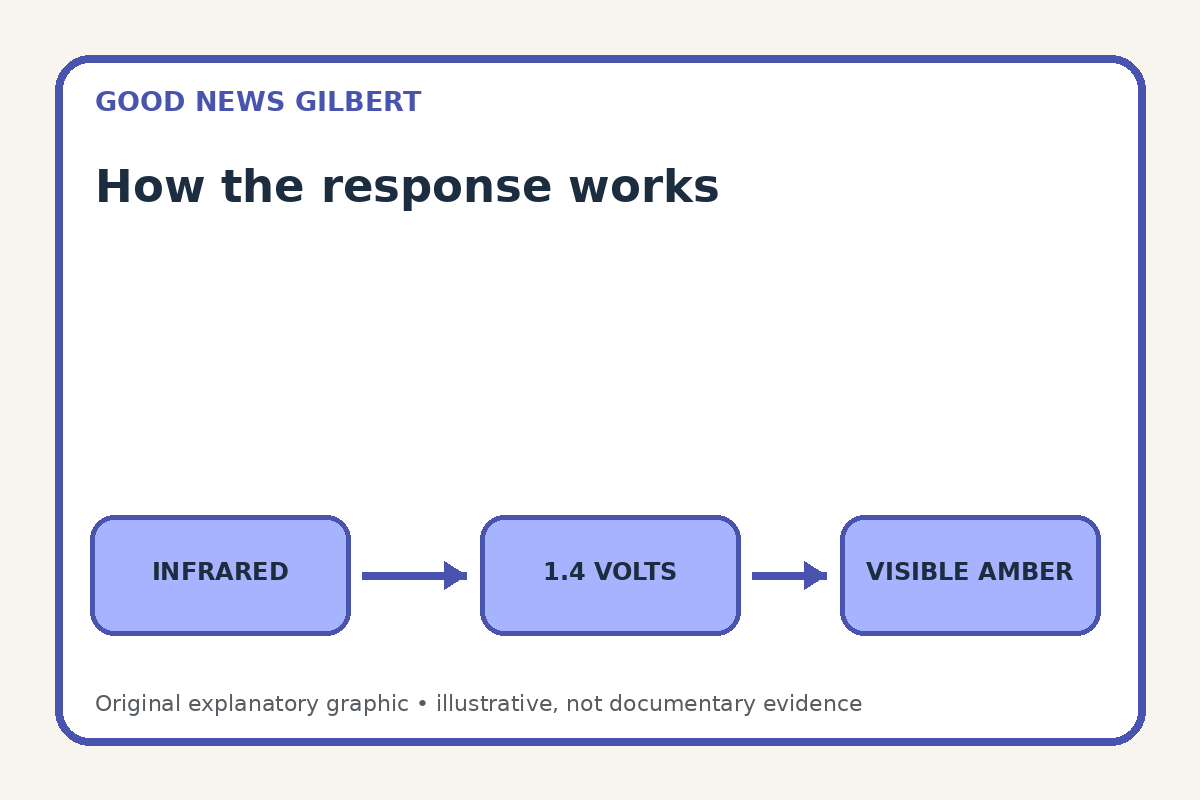
Researchers have demonstrated a compact semiconductor device that converts extremely faint infrared light into visible amber light at low voltage. An indium-gallium-arsenide/indium-phosphide phototransistor detects infrared photons, amplifies the resulting current and directly powers a light-emitting diode.
Its positive feedback combines ordinary transistor amplification with avalanche gain. In the Nature Photonics study, the device operated with breakdown voltage as low as 1.4 volts and made the visible output more than 17,000 times brighter than the incoming infrared light at 6.4 nanowatts per square centimetre, close to natural nightglow intensity.
Hasselt University recently reported a different ultrathin converter that powers a green OLED without an external supply, showing that the field has several routes. This device is still a laboratory component. Image quality, field of view, system efficiency, manufacturing yield and reliability need testing. Even so, avoiding bulky crystals and powerful optical pumps could support lighter night vision, sensing, medical imaging and optogenetics.
Sources
Believe in me?
Help keep solutions journalism going.
 Buy me a coffee
React to this story
Keep the useful discoveries coming.
Get stories around your interests, with links to the evidence and context, in a free email on some Fridays.
See an example and sign up