Liquid-metal labels reveal security keys only in a fleeting heat window
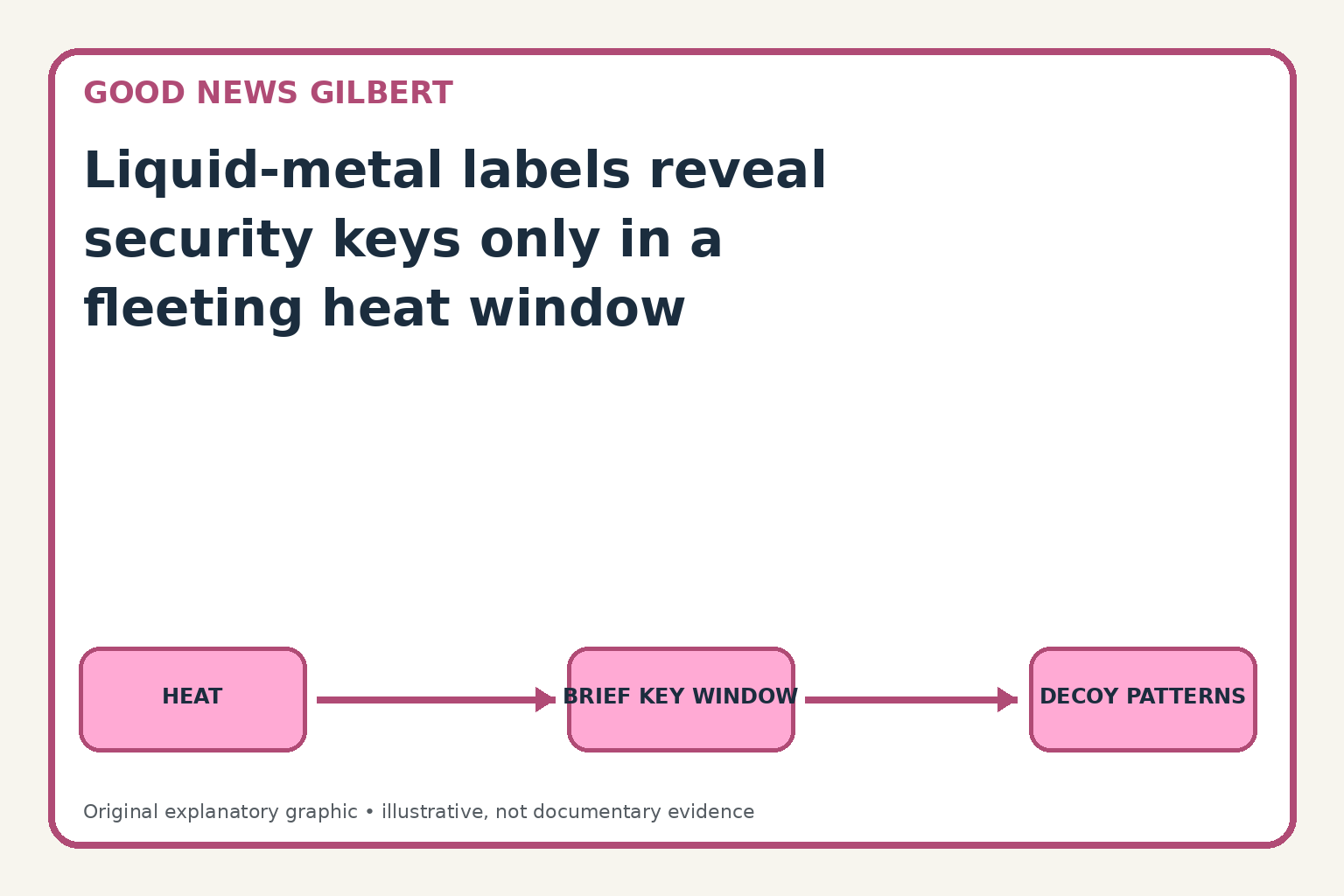
A team in South Korea and the United States has built a hardware identity label whose authentic key appears only briefly as it heats. Randomly mixed liquid-metal particles create a unique thermal microstructure, giving each device a physical fingerprint that is difficult to reproduce.
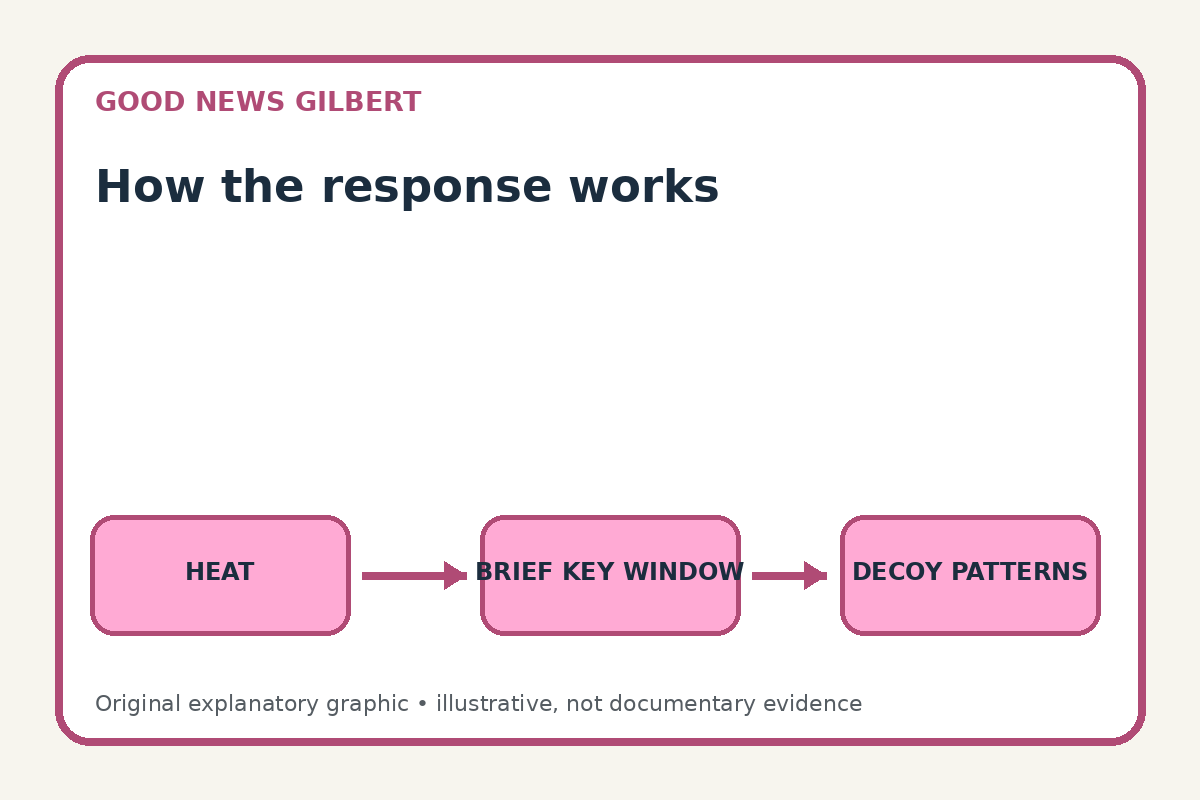
Static hardware fingerprints can still be copied digitally if an attacker collects enough challenge-and-response data. The open-access study adds two defences: the meaningful thermal pattern exists only during a short non-equilibrium window, and patterns outside that temperature range act as decoys. At normal equilibrium the device is cryptographically silent. The team demonstrated patterned labels and QR codes and tested resistance to both physical replication and machine-learning attacks.
A Materials Research Society presentation records the proof-of-concept, including a 15-second key window and scalable stencil printing. This is prototype security research, not proof against every adversary. Mass manufacture, reader cost, ageing, tampering and independent attacks still need testing. Its useful idea is to change the material during observation: the label reveals its identity briefly, then hides it among alternatives, offering supply chains a more active authentication layer.
Sources
Believe in me?
Help keep solutions journalism going.
 Buy me a coffee
React to this story
Keep the useful discoveries coming.
Get stories around your interests, with links to the evidence and context, in a free email on some Fridays.
See an example and sign up