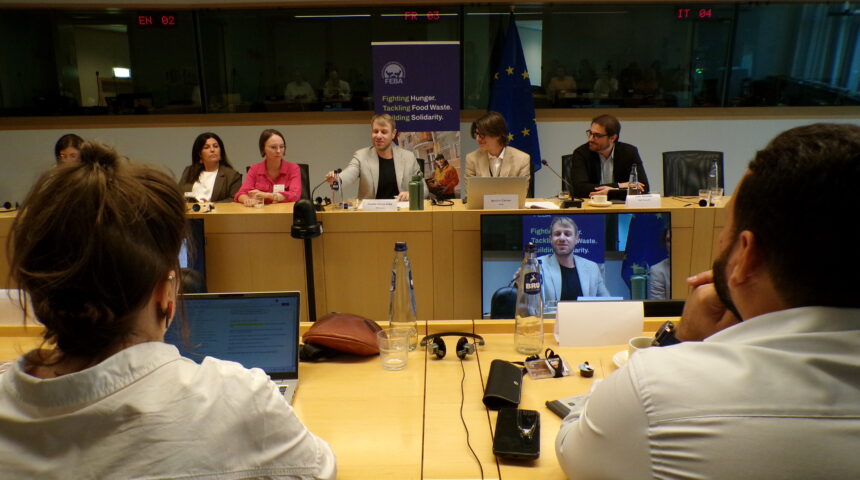
European food banks show how food aid can support social inclusion
European food banks distributed more than 106,300 tonnes of food through the European Social Fund Plus in 2025, reaching over five million people, according to evidence presented by FEBA.
The figures were shared at FEBA’s Annual Forum on Food Aid and Social Inclusion, where EU institutions, charities and food bank representatives discussed how funding and the forthcoming EU Anti-Poverty Strategy could better support people facing hardship.
Food assistance meets an immediate need, but the approach also frees food banks’ own resources for education, training and other support that may help people move beyond crisis. Participants called for long-term funding, stronger minimum-income guarantees, better social services and the direct involvement of people experiencing poverty in policy decisions.
That combination matters as food inflation, housing costs and in-work poverty increase demand across Europe. It treats a meal as an entry point to wider inclusion rather than an endpoint.
FEBA also stressed the central limitation: food banks are not a solution to poverty itself. Their impact depends on sustained investment, strong partnerships and structural policies that reduce the need for emergency food.
React to this story
Original reporting from European Food Banks Federation — read source