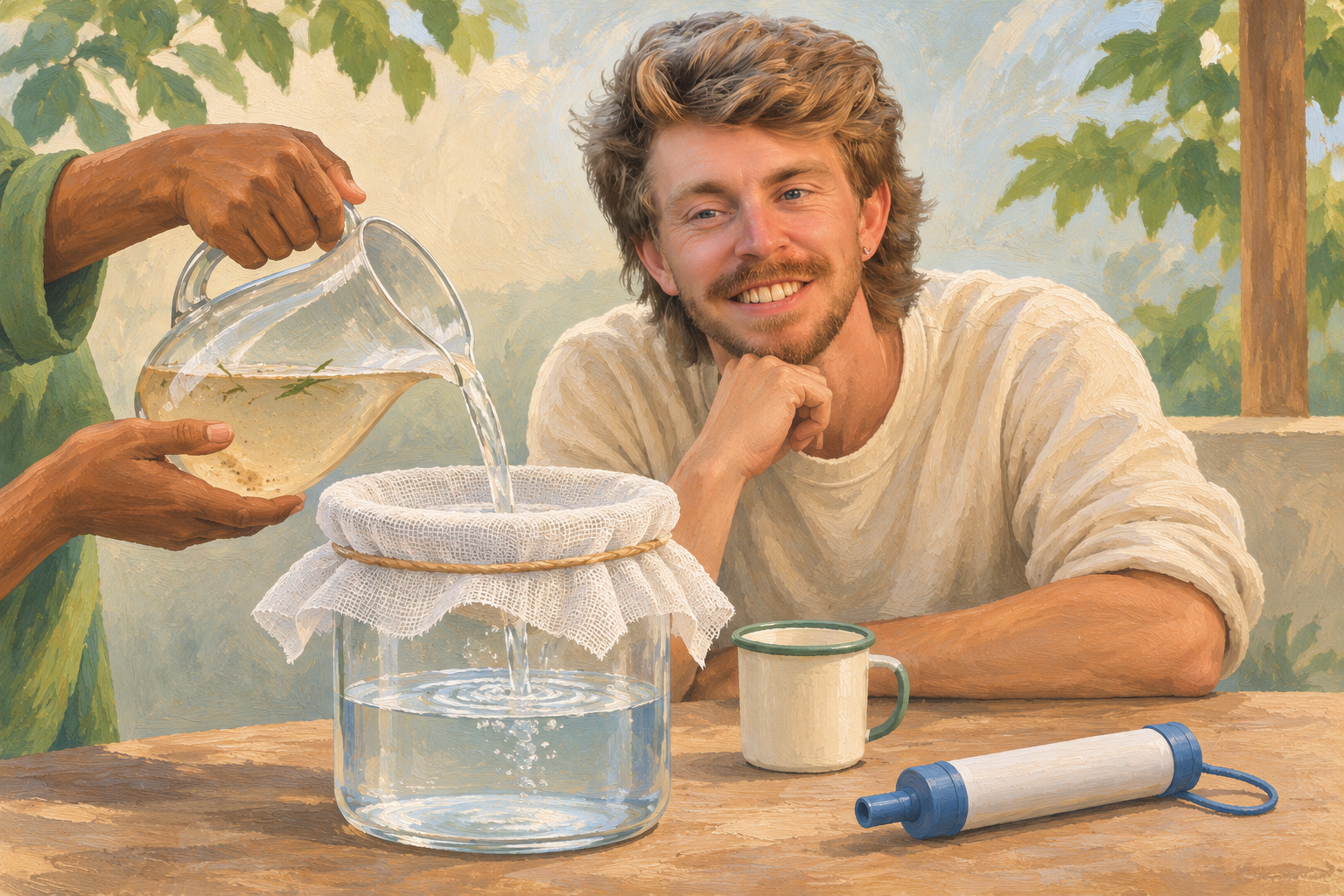
Community health efforts push back neglected tropical diseases
Millions fewer people need treatment or prevention for neglected tropical diseases, according to a new World Health Organization report. These illnesses can cause blindness, disability and lasting hardship in communities already facing poverty.
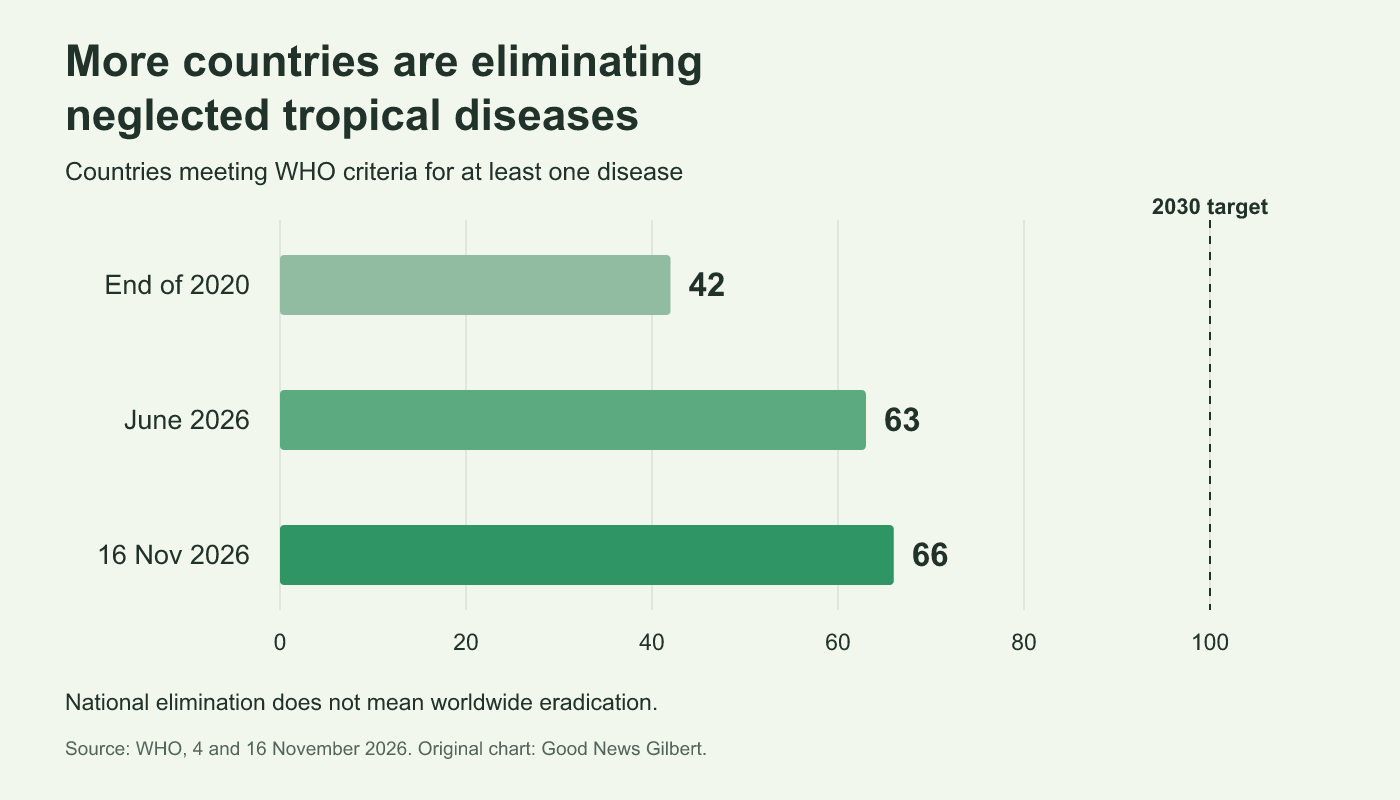
In 2024, 1.41 billion people required interventions, 36% fewer than in 2010. By June 2026, 63 countries had eliminated at least one disease under WHO criteria, compared with 42 at the end of 2020. National elimination does not mean a disease has disappeared worldwide.
Guinea worm shows what sustained local action can achieve. Just ten human cases were reported in 2025, against an estimated 3.5 million annually in 1986. The Carter Center describes volunteers teaching families to filter drinking water and keeping infected people and animals away from water sources.
Animal infections still obstruct eradication, while WHO warns that funding cuts threaten wider progress.
Progress continues. On 16 November, WHO recognised Eritrea’s elimination of trachoma as a public health problem, bringing the number of countries to have eliminated at least one neglected tropical disease to 66.
Sources
- World Health Organization — Progress against neglected tropical diseases requires sustained action
- World Health Organization — Global report on neglected tropical diseases 2026: mid-term evaluation of the road map implementation
- The Carter Center — Countdown to Zero — Guinea Worm Disease Eradication Program
- World Health Organization — Eritrea eliminates trachoma: a major public health milestone
 Buy me a coffee
React to this story
Keep the useful discoveries coming.
Get stories around your interests, with links to the evidence and context, in a free email on some Fridays.
See an example and sign up